
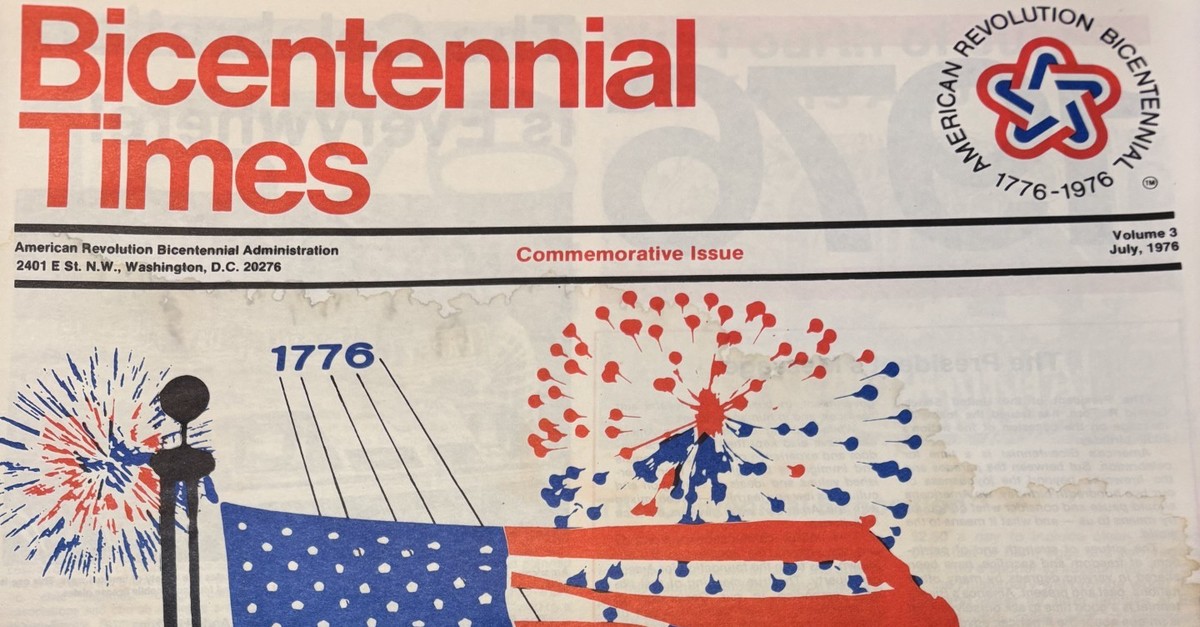
When I was a boy, my mother gave me a subscription to “Bicentennial Times”. The year of course was 1976. Most of the articles were beyond me but what I learned was this bicentennial thing was a big deal and I wanted to find out why. That pursuit was the foundation of my lifelong love of history and also led to me being very proud to be American. I saved every one of those issues (one of which is the picture above). Now, I look back fifty years later with lifetime of experience behind me but the same passion for the country I love.
One of the differences between then and now is, with 25+ years of experience in recruiting, being American means something more. I can’t help to think that there is no better representation of the United States than the job of a recruiter. We are in the freedom business. Every time we open a requisition, write a job description, or lay out an interview process, we’re creating someone’s ability to choose their own path. For most of human history, and in huge parts of the world today, that’s not a choice. Your job was inherited or assigned. Not here.
If you have ever dinged a resume for “job hopping”, sit with that for a second. What you call instability, most of the world would call a miracle.
The numbers back this up. Nearly 6 in 10 U.S. professionals were recently job hunting, not out of desperation but because they knew they could be. The average American changes jobs about a dozen times over a career, and Gen Z is on pace for 17. That’s not instability, that’s freedom exercised at scale. Pension portability rewired this too: workers used to be trapped by what they’d lose by leaving. Now mobility isn’t a loophole. It’s the point.
We spend so much time optimizing the machinery of hiring (time-to-fill, quality-of-hire, pipeline conversion, etc.) that we lose the thread on what the machinery is actually for. I’ve watched candidates leave factory floors for their first office job, single parents take pay cuts for schedules that worked, career-changers in their 50s get a “yes” because someone believed potential over pattern-matching. None of that happens without the freedom to try, and none of it is guaranteed.
Honest Counterpoint
Freedom in the labor market isn’t distributed equally. Access still varies by zip code, industry, who you know. I’m not pretending otherwise. But being able to criticize the system and push it to be fairer is part of the freedom too. In plenty of places, you don’t get either. I won’t go into how to criticize, which many Americans need help with today but we should never take for granted the ability to share dissenting opinions. It is a freedom millions of people in the world live without.
So this Fourth of July, I’m genuinely grateful for a country that lets people choose their own path, and for a profession that gets to help them walk it. Enjoy the 250th birthday of the United States of America!
What does the freedom to choose your career mean to you? I’d love to hear your story in the comments.
Eddie Stewart is the Principal Consultant and Founder of ES Talent Solutions, a recruiting strategy and talent advisory firm helping organizations build hiring processes that open doors instead of closing them. Reach out at estewart@estalentsolutions.com.
#IndependenceDay #TalentAcquisition #CareerMobility #EarlyTalent #UniversityRecruiting #HRStrategy #WorkforceOpportunity #ESTalentSolutions



0 Comments
Onboarding Is the Final Step of Sourcing
Nearly half of all first-year employee departures happen within the first 90 days—and the number one reason isn’t bad orientation or delayed IT setup. It’s the gap between what candidates were promised during the hiring process and the actual day-to-day reality of the role. When recruiting dashboards stop counting at offer acceptance, organizations measure the sale while ignoring the returns. In his latest article, TA Leader and Recruiting Architect Eddie Stewart breaks down why onboarding is the ultimate audit of your sourcing strategy, offering six actionable ways Talent Acquisition teams can bridge the handoff gap, measure 90-day retention, and stop refilling avoidable reqs.
The Demographic Cliff
The current soft job market is a deceptive illusion masking a permanent, structural labor shortage. Driven by decades of declining birth rates, an aging workforce, and an impending “enrollment cliff,” the U.S. labor force is set to shrink by nearly 6 million workers between 2025 and 2032. While AI-generated spam application floods give employers a false sense of candidate abundance, critical sectors like healthcare and skilled trades face structural deficits that technology cannot fix. Stewart urges talent leaders to stop waiting out market cycles and instead adopt proactive workforce strategies—including internal mobility, phased retirements, broader campus outreach, and alternative talent pools.
The Regulatory Roadmap, Part 2
January 1 brings new AI hiring rules in Colorado and California, and they all start with one question: which tools in your funnel score, rank, or filter candidates? Most compliance problems in 2027 will start as inventory problems in 2026.