

Issue 2- Discombobulated Modulation
In an earlier post, I discussed problems with Applicant Tracking Systems (ATS) and the idea that it may not be the ATS but other underlying issues at play. I addressed the first of those issues being companies not having a well-defined recruiting process to which the ATS can be aligned. Read that post here:

Three Reasons Your ATS is Just Fine (Part 1 of 3)
Today we’ll turn to a second potential issue – “discombobulated modulation”
I’m not sure if those words make sense or ever belong together but, if so, it sure feels like something confusing, just like our second issue. A running joke among recruiter types is that, if you go to a recruiting networking group and ask the question, “What’s wrong with your ATS?”, you’ll get passionate responses describing all the misgivings. These recruiters are describing things their ATS can’t do but may not realize the company has elected not to turn on those features. There can be many reasons for this. How old is the system? Did the company build what they could afford at that time or was that function not needed at the time of purchase? It’s good business sense to only pay for what you will use but that needs to be followed up with a regular review of how recruitment evolves at the company and how the ATS should be adjusted to keep up. Interestedly, I have also witnessed the other side of the coin where features are active in the ATS but nobody knows about it, leading to more complaints about what the ATS can’t do. Often, new features are added by vendor updates but no one at the company notices or has the time to incorporate into their process.
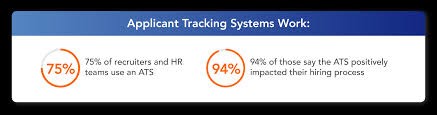
Did you know 99% of Fortune 500 companies use Applicant Tracking Systems?
There is a solution. Have someone (depending on size and how your organization is set up) like recruiting operations, super users, HR point person, etc. review the ATS with the vendor at least once a year to understand what is being used, what isn’t, and what can be optimized. In the event features are unused or do not know how to be used, there is an easy fix. You may be wondering, why in the world would a company have an active feature (possibly even paying additional money for it) and not use it? I once came across a company where there was a large turnover of recruiters and some ATS best practices left with them. The new hires followed the lead of the people already working in the department, who weren’t using the system to its fullest and that became the new standard. There can be other reasons as well but, no matter what the reason, communication and training is the key to eliminate any confusion and gain productive use of the system.
Consider setting up regular sessions where the recruiting team (for small or one-person recruiting teams look for networking groups or work with the vendor) talks about what they like and don’t like about the system, share best practices, and even put together wish lists of features they would like to have.
I’ll continue the conversation next time to discuss a third underlying problem which cause inefficiencies when using an ATS. – “The P Factor”. In the meantime, I’m interested in your thoughts. Share your experiences by commenting on the article or feel free to reach out to me directly (estewart@ESTalentSolutions.com) with any comment/questions.


0 Comments
Onboarding Is the Final Step of Sourcing
Nearly half of all first-year employee departures happen within the first 90 days—and the number one reason isn’t bad orientation or delayed IT setup. It’s the gap between what candidates were promised during the hiring process and the actual day-to-day reality of the role. When recruiting dashboards stop counting at offer acceptance, organizations measure the sale while ignoring the returns. In his latest article, TA Leader and Recruiting Architect Eddie Stewart breaks down why onboarding is the ultimate audit of your sourcing strategy, offering six actionable ways Talent Acquisition teams can bridge the handoff gap, measure 90-day retention, and stop refilling avoidable reqs.
The Demographic Cliff
The current soft job market is a deceptive illusion masking a permanent, structural labor shortage. Driven by decades of declining birth rates, an aging workforce, and an impending “enrollment cliff,” the U.S. labor force is set to shrink by nearly 6 million workers between 2025 and 2032. While AI-generated spam application floods give employers a false sense of candidate abundance, critical sectors like healthcare and skilled trades face structural deficits that technology cannot fix. Stewart urges talent leaders to stop waiting out market cycles and instead adopt proactive workforce strategies—including internal mobility, phased retirements, broader campus outreach, and alternative talent pools.
The Regulatory Roadmap, Part 2
January 1 brings new AI hiring rules in Colorado and California, and they all start with one question: which tools in your funnel score, rank, or filter candidates? Most compliance problems in 2027 will start as inventory problems in 2026.